Muay Thai Basics: Foundational Techniques Every Beginner Should Know
New to Muay Thai? Start here. A clear breakdown of the stance, footwork, and core strikes that everything else is built on.
Every advanced combination you'll ever see in a Muay Thai fight — the spinning elbows, the flying knees, the slick counters — is built on a small set of fundamentals. Get these right, and everything else becomes easier, safer, and far more powerful. Get them wrong, and you'll spend years working around bad habits.
Here's a beginner-friendly guide to the foundational techniques of Muay Thai.
The stance
Everything starts here. A good Muay Thai stance is balanced, mobile, and protective.
- Feet roughly shoulder-width apart, with your weak side forward (orthodox fighters lead with the left; southpaws with the right).
- Weight slightly forward on the balls of your feet, knees softly bent — never locked, never flat-footed.
- Hands up. Lead hand slightly forward, rear hand guarding your chin. Elbows tucked, not flared.
- Chin down, eyes up. Tuck your chin behind your lead shoulder and look at your partner's chest so you see both hands and feet.
This posture lets you move in any direction, defend, and strike — all without having to reset. Drift out of it, and you become slow and vulnerable. Stay in it, and you're always ready.
The footwork
Footwork is how you control the fight. The golden rules:
- Move the foot closest to the direction you're going first. Stepping forward? Lead foot first. Backward? Rear foot first. This keeps you balanced at all times.
- Step, don't reach. Big lunges leave you committed and off-balance. Small, deliberate steps keep you able to change direction instantly.
- Stay light. Your feet should barely graze the floor. Planted feet mean slow reactions.
The jab
The jab is the most important punch in Muay Thai — and the most underused by beginners. It's your range-finder, your distraction, your defensive shield, and the setup for everything heavier.
- Extend your lead hand straight from the chin, rotating the fist palm-down at the end.
- Keep your rear hand glued to your cheek for cover.
- Retract the hand faster than you threw it. A lazy jab coming back is a counter waiting to land.
The cross (straight right)
Your rear-hand power punch. It travels further, so it hits harder — but it also exposes your lead side.
- Pivot your rear hip and shoulder through the punch. Power comes from the ground up, not the arm.
- Keep your lead hand up to guard against the counter.
- Return to stance immediately — don't admire your work.
The teep (push kick)
The teep is the jab of your legs — a long, straight push kick used to manage distance and disrupt your opponent's rhythm. It's one of Muay Thai's signature tools.
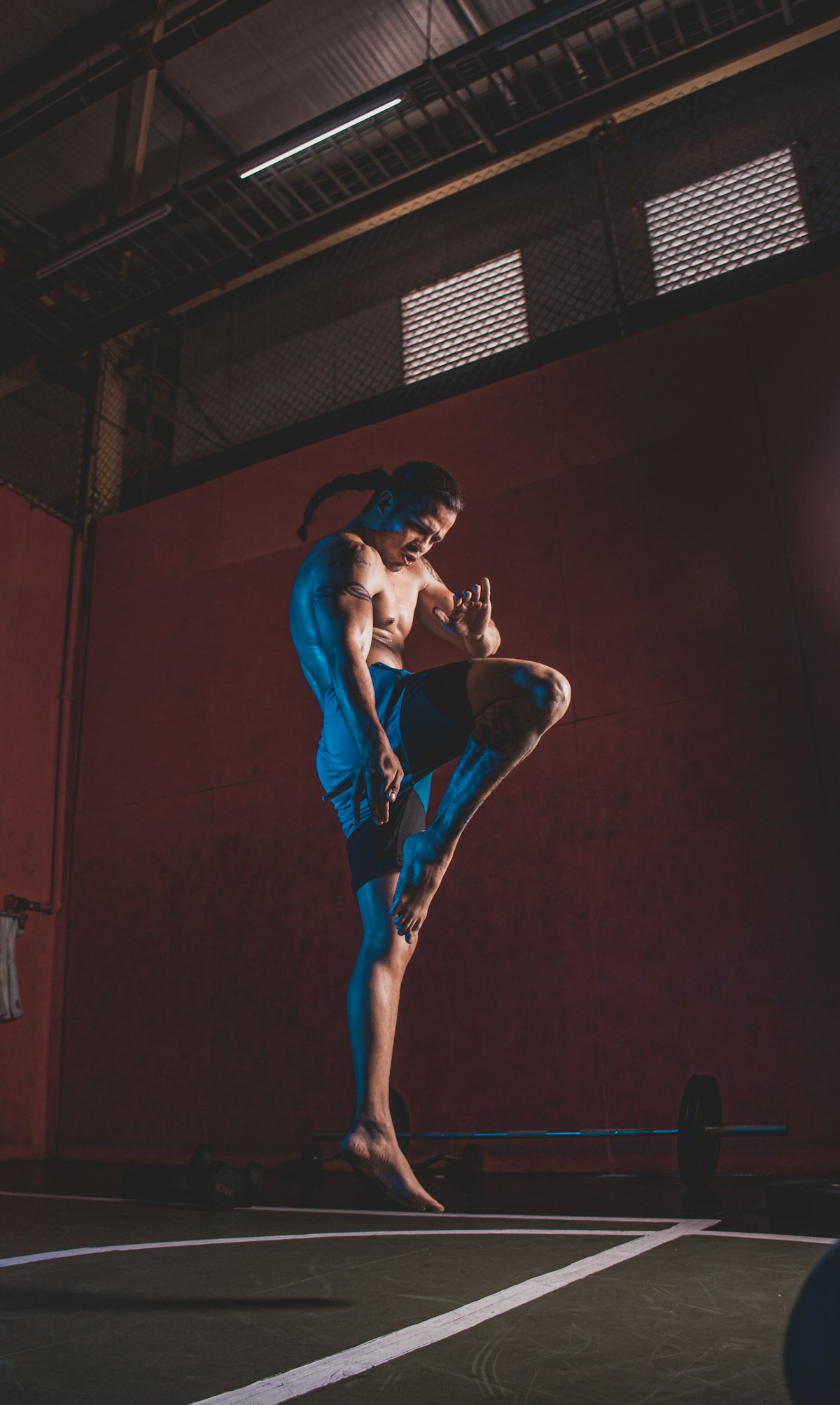
- From stance, lift your lead knee to your chest.
- Push the ball of your foot straight forward at your partner's midsection or hip.
- Recoil the leg back to stance quickly so you're never left standing on one leg.
The roundhouse kick
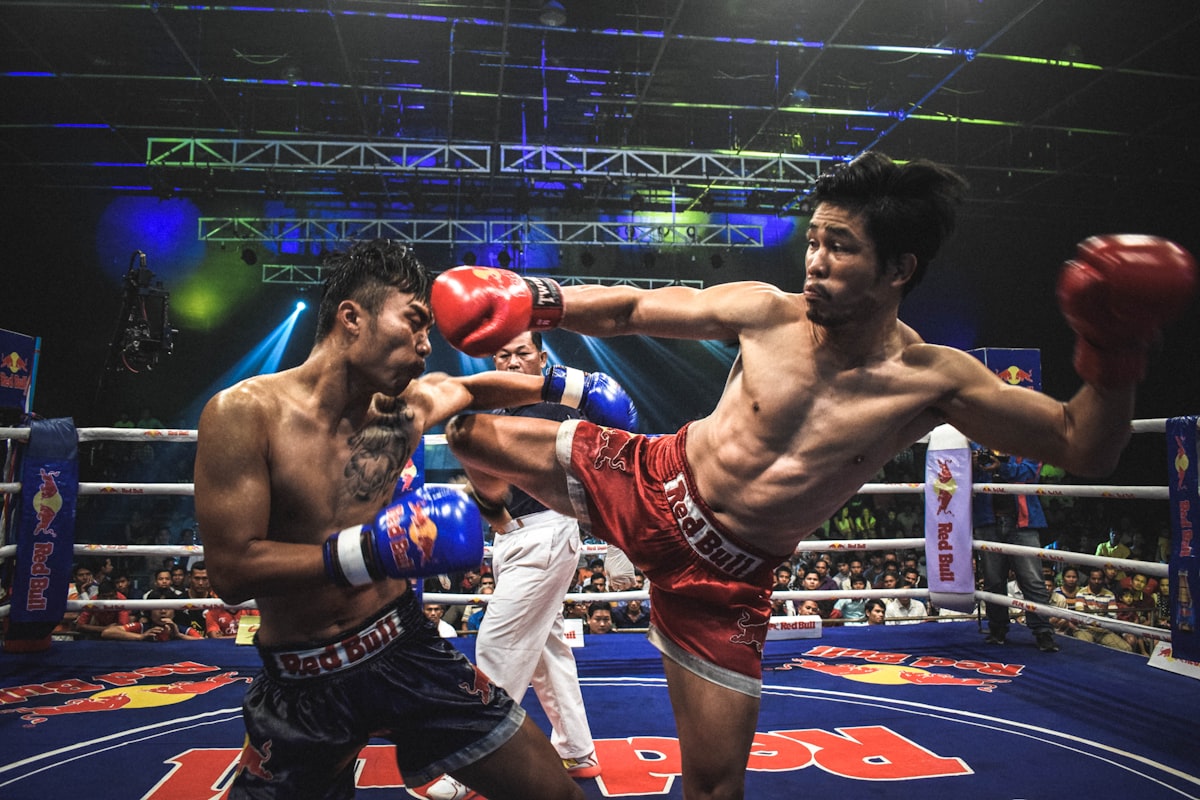
The roundhouse is the kick most people picture when they think of Muay Thai. It's swung with the rear leg, rotates through the hips, and lands with the shin — not the foot.
- Step slightly off-centre with your lead foot to open your hips.
- Swing the rear leg through like a baseball bat, turning your hip and supporting foot over.
- Strike with the shin to the leg, body, or head.
- Follow through — don't pull back halfway.
The hip rotation is everything. Beginners often kick with the leg alone and wonder why it has no power. Turn the whole body behind it and the shin becomes a weapon.
The clinch — Muay Thai's secret weapon
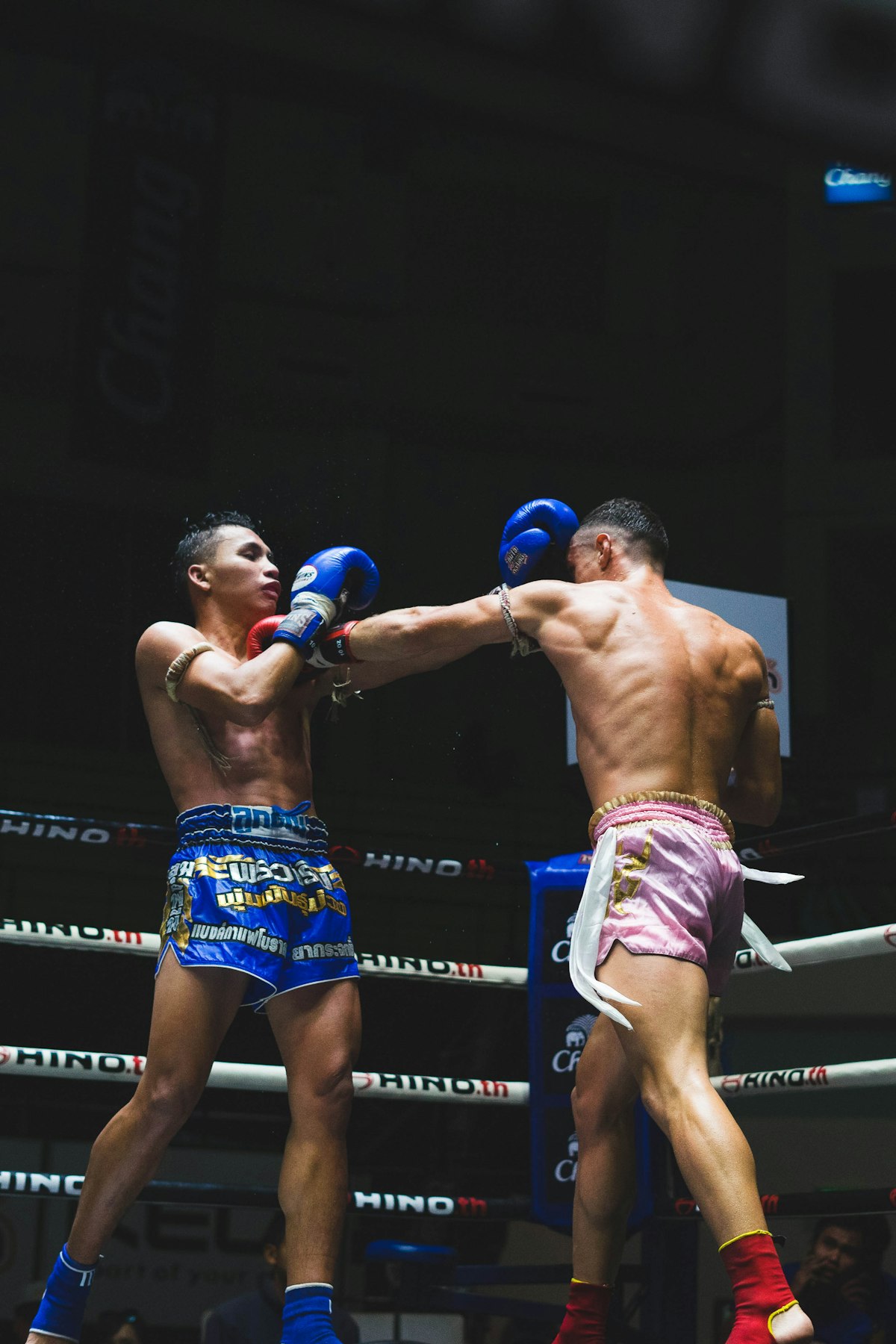
What truly separates Muay Thai from most striking arts is the clinch — close-quarters control where you grip behind your partner's neck and head to off-balance, knee, and dominate.
- Hands locked behind the neck, elbows in, posture upright.
- Keep your hips close to control theirs.
- Knees to the body and short elbows are your tools here.
For self-defence especially, clinch skill is invaluable — most real confrontations happen at this range, and knowing how to control someone in close quarters can keep you safe where pure punching can't.
How to actually learn the basics
Reading about technique only gets you so far. The body has to feel it — hundreds of repetitions, under the eye of a coach who can catch the small errors you'll never notice yourself.
Our advice for beginners:
- Drill before you spar. Pad rounds and shadowboxing build the pattern; sparring tests it under pressure.
- Slow it down. Speed hides mistakes. Do it correctly first, then add power, then add speed.
- Show up weekly. Consistency beats intensity. Two good sessions a week for a year will transform you.
If you're ready to build a real foundation in Muay Thai, come train with us. We'll take you from your very first stance to your first confident round on the pads — properly, safely, and with respect for the art.